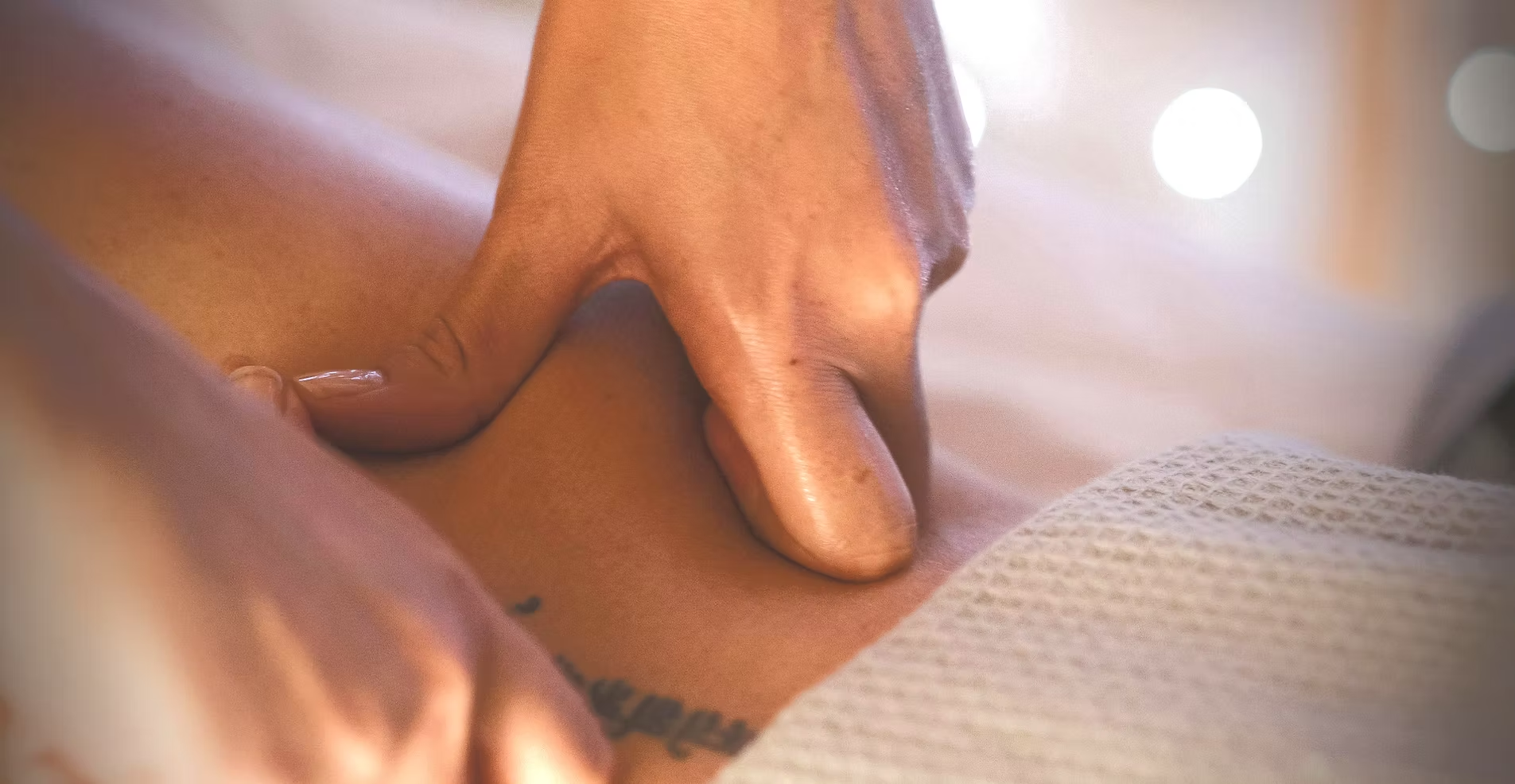
By the time November settles over Edmonton, many people are already noticing it in their hands first — that particular stiffness when you reach for your keys in the morning, the reluctance in your fingers as you type, the ache that lingers through the wrist after an evening of knitting or holiday baking. If this sounds familiar, you are not imagining it, and you are far from alone.
Why November Cold Affects Your Hands and Wrists Differently
November in Edmonton is not simply autumn growing cooler — it is a sharp, committed cold that can arrive seemingly overnight, dropping from crisp to genuinely biting within a matter of days. Many clients describe a distinct shift around this time of year: their hands begin to feel, as one person memorably put it, "like they belong to someone else." Reduced dexterity, a sense of tightness across the knuckles, and that familiar reluctance in the wrists when beginning fine-detail work are experiences that come up again and again in the treatment room at this time of year.
What is happening is likely a confluence of factors rather than any single mechanism — and it is worth being honest that the precise physiology is more complex than a tidy explanation allows. Cold exposure is associated with changes in peripheral circulation and shifts in how muscles and connective tissue behave, though how much of that translates into the stiffness people describe remains an active area of discussion. What we can say with confidence is that the experience is real, it is widespread, and it tends to be more pronounced in people who commute outdoors, work at keyboards for long stretches, or engage in repetitive fine-motor tasks.
Traditional Thai medicine offers one additional lens through which this experience has been understood for centuries. In Thai healing tradition, the Sen Kalathari is described as an energy pathway understood to course through the arms and into the hands and fingers — one of the primary channels associated with the upper extremities. Practitioners working in this tradition have long observed a relationship between cold, restricted flow in these pathways, and the discomfort their clients describe. Whether one reads this as metaphor or as the product of long, careful observation, it is a framework that many people find resonates with their felt experience in a way that purely mechanical descriptions sometimes do not.
The Forearm–Wrist–Hand Connection: What Massage May Address
One of the things that tends to surprise people is how much of what they feel in their wrists and fingers has a broader context. The muscles that govern fine-motor hand movements — flexion, extension, grip, rotation — originate largely in the forearm, and tension patterns that people notice in their fingers often have a correlate somewhere further up the arm, into the elbow, and sometimes into the shoulder girdle or the muscles around the neck. This is not to say that everything is connected in some vague, unqualified sense; it is simply that the anatomy of the forearm-to-hand continuum is genuinely interconnected, and therapeutic work directed at one area may usefully consider adjacent ones.
Registered massage therapy directed along this continuum — including myofascial cupping work applied to the forearms — is something many clients find helpful for the sense of tightness and reduced range of movement they carry through the colder months. Myofascial cupping, which uses gentle suction to create a lifting effect in the tissue, is one approach that some people find eases the feeling of density or restriction in the forearms in a way that differs from conventional compression-based techniques. It is worth being clear about what this does and does not mean: any meaningful structural adaptation in tissue takes place over weeks to months of consistent care, not after a single session. What you may notice after one visit is a change in how the area feels — a sense of warmth, ease, or reduced tightness — rather than a permanent structural change.
The goal of therapeutic work in this context is to support your comfort and help address the tension you are experiencing, within a realistic picture of what massage can and cannot do. Some clients find that regular sessions through the winter months — rather than a single visit — give them the most sustained sense of ease.
“The muscles that move your fingers begin well above your wrist — which is one reason why hand and wrist discomfort often responds to work that considers the whole arm.”
Thai Massage Techniques for the Hands and Arms
Traditional Thai massage practised on a floor mat offers a distinctive approach to the arms, wrists, and hands that complements registered massage therapy well. The tradition includes careful thumb-press work along the arm — following the pathways that Thai medicine describes as Sen lines — alongside passive stretching that takes the wrist, elbow, and shoulder through a range of movement that many people simply do not access in a typical day. Western anatomy would describe much of this work as engaging the forearm flexors and extensors, the fascia of the arm, and the soft tissue around the shoulder joint, while Thai medicine understands it through the language of energy pathways and flow. Both descriptions are ways of making sense of the same experience, and clients do not need to subscribe to either framework to notice the effect.
What clients most commonly describe after Thai arm and hand work is a sense of warmth spreading into the fingers, a feeling of ease in the wrist that was not there before, and sometimes a broader sense of release through the shoulder. These are subjective experiences, and they will vary from person to person — but they are reported consistently enough that the tradition has refined this work over many generations for good reason.
For clients who also notice that cold-weather bracing — the hunching of shoulders, the curled gait that Edmonton winters tend to produce — is affecting their feet and lower legs, Thai foot massage may be a worthwhile complement. Many people find the combination of upper and lower extremity work leaves them feeling more settled in the body as a whole, particularly during the months when daylight is shortest and the body is under the most sustained cold-weather demand.
Booking Hand and Wrist Massage in Edmonton This November
If the stiffness, tightness, or discomfort in your hands and wrists is affecting the things you need and want to do — your work, your hobbies, the quiet pleasure of baking or crafting through the holiday season — it may be worth exploring what therapeutic massage could offer you. It is a reasonable thing to attend to, and you do not need to be in significant pain to benefit from care.
Thai Healing Hands is currently taking appointments at our location inside Yeg Wellness Centre at 13819 127 Street NW, Edmonton. We work with clients seeking registered massage therapy, traditional Thai massage, myofascial cupping, and combinations of these approaches tailored to what you are experiencing. We are also pleased to share that a second Thai Healing Hands location at 13805 127 Street NW is opening this winter — though that space is not yet open and cannot be booked. All current appointments are at 13819. If November has your hands feeling less than themselves, we would be glad to see you.
Jane Chaulker is a Registered Massage Therapist and Master of Occupational Therapy practising at Thai Healing Hands Ltd. in Edmonton, Alberta. Her approach brings together traditional Thai healing techniques and Western therapeutic methods to support clients through the demands that every Alberta season brings to the body.
Medical Disclaimer: This article is for informational purposes only and does not constitute medical advice. Please consult a qualified healthcare professional before beginning any new therapeutic treatment.