October in Edmonton has a particular quality behind the wheel: amber streetlights still on at 8 a.m., school zones slowing the Henday to a crawl, the first wet snow catching everyone off guard. Commutes that took thirty minutes in September can stretch well past an hour now — and that time is rarely neutral on the body. If you have arrived home lately with a heaviness at the base of your skull, a dull ache across your low back, or hips that feel oddly locked after you step out of the car, you are not imagining it. Daily driving has a cumulative physical toll, and therapeutic massage is one way to begin addressing it.
Why the Driver's Seat Is a Posture Challenge
The driver's seat holds the body in a sustained, static position that most of us never consciously choose — hips flexed and held, spine compressed against a lumbar bolster that may or may not match your own curve, head pushed slightly forward by the angle of the headrest. Western anatomy models describe what happens in prolonged hip flexion as a kind of tonal shift: the tissues at the front of the hip remain shortened throughout the drive, while the structures at the back — glutes, hamstrings — are held in a lengthened, relatively passive state. Whether that produces measurable structural change depends on weeks and months of repetition, not a single commute, but many people report that the cumulative effect of a working week spent primarily seated is something they can feel by Thursday or Friday.
There is also an asymmetry in driving that tends to go unnoticed. The right foot moves between the accelerator and brake continuously; the left rests on the dead pedal or floats. One hand may grip the wheel more firmly than the other during a tricky merge or a slick corner. In traditional Thai medicine, this kind of sustained uneven effort is understood as a disruption to the Sen lines — the energy pathways that practitioners work with to support whole-body ease and flow. Whether one reads that as metaphor or as the accumulated observation of generations of practitioners, it describes something many commuters recognize in their own bodies: an asymmetrical tiredness that no amount of sitting on the couch quite resolves.
What Commuters Often Feel by Friday
There is a fairly consistent pattern in what Edmonton commuters describe when they come in after a week of heavy driving. The base of the skull can carry a peculiar heaviness — not quite a headache, but a sense of weight and compression that is easy to overlook until someone applies attention to it. Cervical extensor fatigue is one way the anatomy literature describes this; the muscles at the back of the neck labour to hold the head upright against the slightly forward position that most head restraints encourage. By the end of the week, that effort has quietly accumulated.
Mid-back fatigue is another common report, particularly through the thoracic spine, which does relatively little in the driver's seat and can feel stiff and unresponsive as a result. The outer hip and glute area — the region that bears most of the sitting load — often feels tight or locked in a way that is hard to stretch out on your own. And many clients are surprised to notice, once a therapist draws attention to it, how much they have been bracing through the forearms and wrists: gripping a steering wheel in stop-and-go traffic is quiet, effortful work, and the forearm extensors can accumulate a low-grade tension over a long commute that does not announce itself loudly until it is addressed.
“Many clients have quietly accepted driving stiffness as simply part of their week. It is worth asking whether it has to be.”
How Therapeutic Massage May Help Settle Driving Tension
At Thai Healing Hands, located inside the Yeg Wellness Centre at 13819 127 Street NW, three modalities are available that many commuter clients find particularly helpful when used together or on their own. Deep tissue massage is designed to address the denser, more persistent areas of muscular tension — the kind that builds across a working week. It works with sustained, focused pressure through layers of tissue, and many clients notice a meaningful settling of that mid-back heaviness and hip tightness in the hours and days following a session. The work is not about producing quick structural change — genuine tissue adaptation follows weeks and months of consistent care — but as a way of supporting the body's own capacity to ease and recover, many people find it worthwhile.
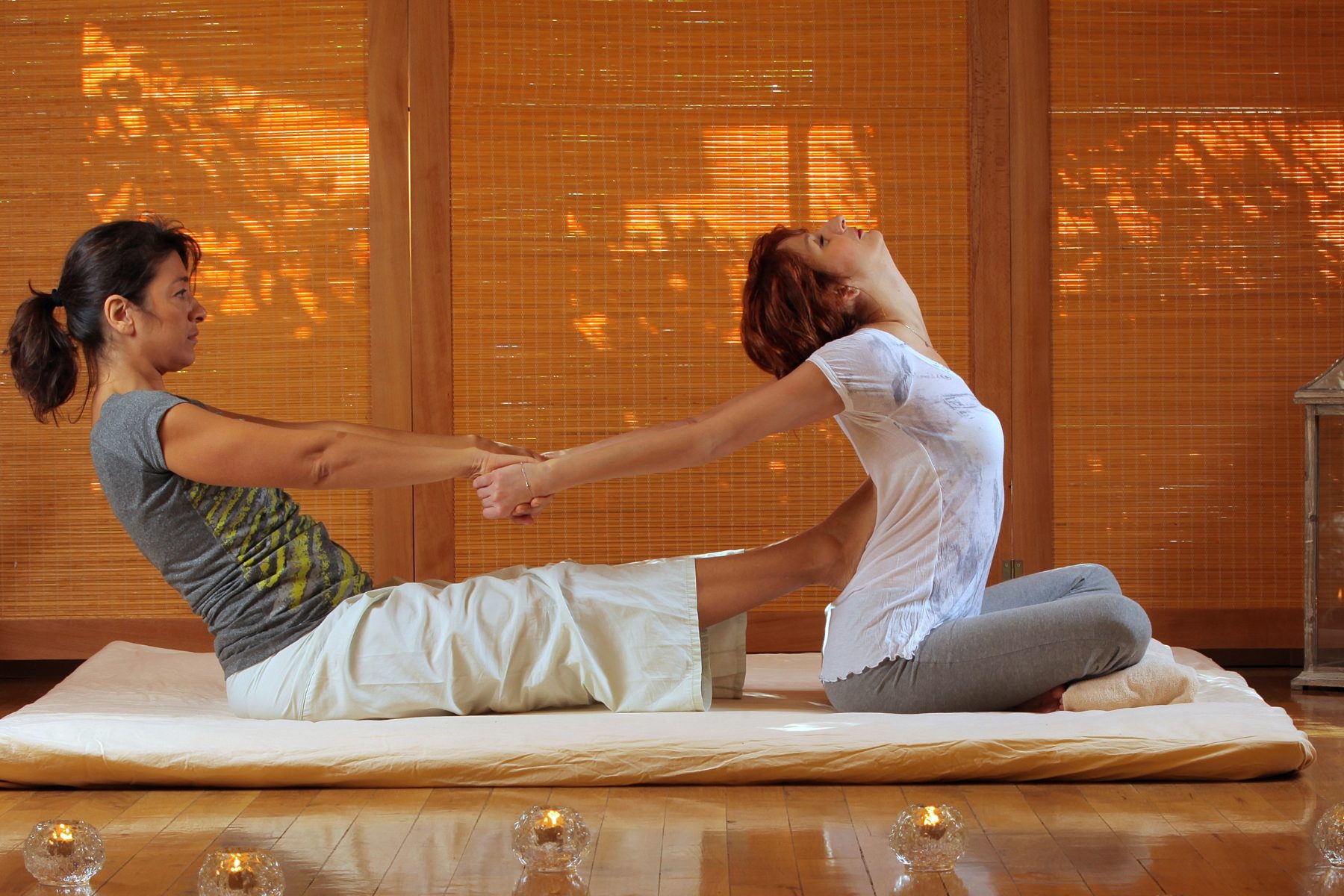
Traditional Thai massage brings a different quality to the session. Practised fully clothed and incorporating rhythmic compression, assisted stretching, and work along the Sen energy pathways, it is particularly well-suited to the whole-body asymmetry that driving tends to create. In Thai medicine, the Sen Kalathari is understood as a pathway connected to the limbs, the joints, and the held patterns of effort — and sustained unilateral work like driving is thought to affect its flow. Whether that framing resonates with you philosophically or you simply appreciate the practical result, many clients describe Thai massage as the modality that leaves them feeling most evenly balanced and mobile afterward.
Myofascial cupping, which uses negative pressure rather than direct compression, is a useful complement for areas like the upper back and outer hip where tension can feel particularly dense and resistant. The sensation is distinct from massage pressure, and many people find it eases a kind of surface-level tightness that hands alone do not quite reach. Jane and her team can discuss which combination of these approaches may be most appropriate for your particular pattern of discomfort.
Making It Part of Your October Routine
The commuters who find the most benefit from regular massage tend to approach it the way they might approach any other form of maintenance: consistently, and with reasonable expectations. A single session can offer meaningful temporary ease, but for those whose driving schedules are intensive — five days a week, an hour or more each way — a rhythm of every two to three weeks through October and into the winter tends to support a more lasting sense of comfort and ease of movement. That said, even monthly sessions are more useful than waiting until the tension becomes impossible to ignore.
When you book, it helps to mention your commute specifically — how long, how often, which side tends to feel worse, whether you have noticed any particular pattern in the discomfort across the week. That context allows your therapist to tailor the session toward the areas and sensations that are most relevant to you, rather than working from a generic template. Massage for commuters in Edmonton is not a niche specialty so much as an awareness that the body keeps a record of time spent behind the wheel — and that it responds well to informed, consistent attention.
If October's commutes have left you carrying tension you cannot quite shake — in the neck, the low back, the hips, or somewhere harder to name — Thai Healing Hands is here to help you work through it. Jane and her team at the Yeg Wellness Centre (13819 127 Street NW, Edmonton) offer deep tissue, traditional Thai massage, and myofascial cupping tailored to your patterns and your schedule. Reach out to book your October appointment, and give your body the attention it has quietly been asking for.
Medical Disclaimer: This article is for informational purposes only and does not constitute medical advice. Please consult a qualified healthcare professional before beginning any new therapeutic treatment.