November in Edmonton means packed arenas, early mornings, and a whole lot of hours spent either on the ice or watching from the stands. Whether you are driving hard through your adult-league stride, keeping your teenager's water bottle stocked at centre ice, or cheering from a cold rink bench, the hips and glutes tend to be where the season shows up first — heavy, stiff, and reluctant to let go.
Why Skaters Feel It in the Hips and Glutes
Every skating stride asks the hip to move through flexion, extension, and abduction in a compressed window of time, over and over again. Stopping, pivoting, and crossovers layer an asymmetrical demand on top of that — the push-off side and the glide side accumulate different kinds of loading, and over a full season many skaters notice that one hip or glute feels markedly tighter than the other. The iliotibial band, the hip flexor chain, and the gluteus medius are structures that practitioners working from a Western anatomical model tend to pay close attention to in this population. These are real structures doing real work; what is less settled is exactly how they respond to skating load, and that is worth being honest about.
In Thai medicine, pathways called Sen lines are understood to carry energy through the inner and outer thigh and into the hip. Practitioners working within this tradition read patterns of restriction in those pathways as something worth addressing directly, whether one interprets that as metaphor, as the product of long clinical observation, or as something else entirely. Both frameworks — the Western anatomical and the Thai philosophical — are interpretive lenses that inform how a skilled therapist might approach the region. Neither should be presented as a settled explanation of what is happening inside the tissue, and a good practitioner will tell you as much.
The Rink-Bench Effect: Tension Without Movement
Not everyone in the arena is skating. Parents, coaches, and siblings who spend two or three periods on hard plastic or wooden seating often step outside describing a heavy, locked-in feeling across the low glutes and outer hips — something that is different in character from post-exercise soreness but can be just as persistent. Prolonged static loading on a firm, cold surface may contribute to that sense of compression and stiffness, though the precise mechanisms are genuinely difficult to disentangle from simple stillness, cold exposure, and the postural habits people bring with them before they ever sit down.
What is consistent is the report itself. People who spend extended time on rink benches — especially across multiple games in a weekend tournament — frequently describe that same quality of dull heaviness that skaters know, arriving through an entirely different route. That commonality is part of why hip and glute work tends to be useful for the whole hockey-family picture, not only the athletes on the ice.
“The hips tend to be where the season accumulates — not just for the skaters, but for everyone who shows up and stays through the final buzzer.”
What a Session May Feel Like
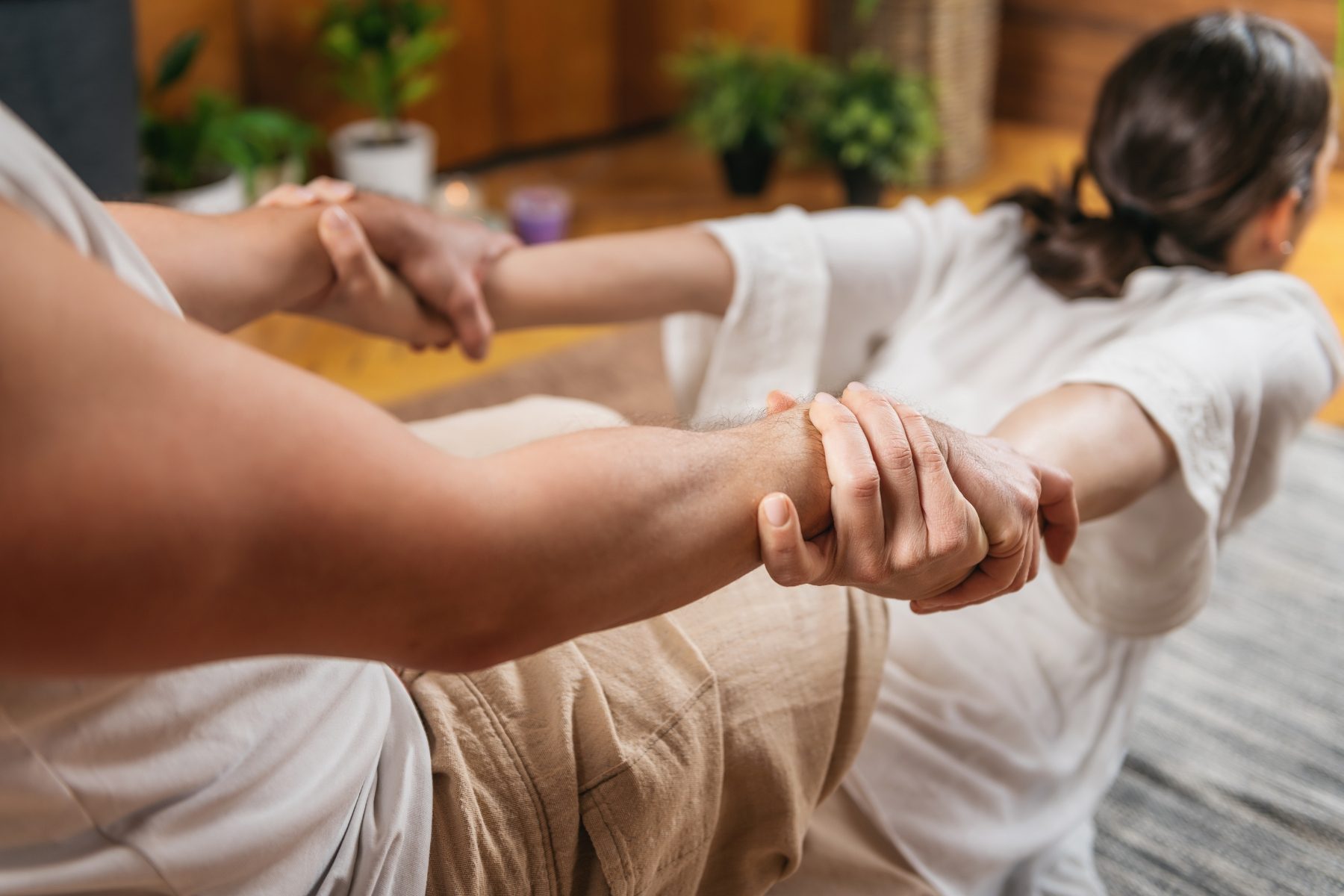
At Thai Healing Hands, the approaches most commonly drawn on for hip and glute work include traditional Thai massage, deep tissue massage, and myofascial cupping. Each tends to produce a different quality of sensation in the region. Traditional Thai massage uses supported stretching and rhythmic compression along the pathways described in Thai medicine; many clients notice a gradual easing of that locked-in quality, particularly through the outer hip and inner thigh. The work tends to feel deliberate and unhurried, and some people find it particularly useful when what they need is not just pressure but movement through range.
Deep tissue work applies slower, more focused pressure to areas that feel dense or guarded, and clients often describe a sense of the tissue becoming more responsive as the session progresses — less resistant to the therapist's contact. Myofascial cupping uses negative pressure rather than compression, and the sensation is distinct: many people describe a pulling warmth and a noticeable shift in how freely the skin and underlying tissue seem to move. All three approaches can be combined or adjusted depending on what you are carrying into the session and how your body is responding on the day.
How Often, and What to Expect Over Time
A single session may leave you feeling noticeably looser and less guarded through the hips — that is a reasonable and common outcome, and it is worth valuing on its own terms. What a single session is unlikely to do is produce lasting structural change. Tissue adaptation — the kind that meaningfully shifts how a region moves or responds over time — tends to follow weeks or months of consistent care combined with what you are doing between sessions: how you are moving, how you are recovering, how much load you are accumulating at the rink.
For skaters mid-season, a practical approach is often one session every two to three weeks, adjusted based on how you are responding. Some people find that more frequent work early in a symptom flare settles things down faster, then a maintenance rhythm sustains that. The honest answer is that there is no universal schedule — it depends on you, your body, and how the season is going. The best starting point is showing up for one session, paying attention to how you feel in the days that follow, and building from there.
If November has your hips feeling the weight of the season — from the ice, the bench, or both — Supattra "Jane" Chaulker, Registered Massage Therapist and Manual Osteopathic Therapist, is currently taking bookings at Thai Healing Hands, located at the Yeg Wellness Centre, 13819 127 Street NW, Edmonton. A second location at 13805 127 Street NW is opening this winter. We would be glad to help you find out what a session might do for you.
Medical Disclaimer: This article is for informational purposes only and does not constitute medical advice. Please consult a qualified healthcare professional before beginning any new therapeutic treatment.